
Mobile App or Website: 5 Criteria for Choosing the Best Option
When starting a new project in Morocco or anywhere else, one of the most important decisions you will face is choosing between a mobile app or website. This decision directly impacts the success of your digital project, the user experience, and your long-term budget. Many business owners find themselves confused when it comes to this choice, especially with modern technologies blurring the lines between the two options.
In this comprehensive guide from ElectroFallah, we will help you understand the fundamental differences between each option and provide clear criteria for making the best decision for your project. Whether you run an online store, a service company, or a startup, understanding these differences will save you time and money while helping you reach your target audience faster and more effectively.
Table of Contents
- What Is the Difference Between a Mobile App and a Website?
- When Do You Need a Mobile App for Your Project?
- When Is a Website the Best Option?
- Comprehensive Comparison: Mobile App or Website
- Development Cost: Mobile App vs Website
- Hybrid Apps and Progressive Web Apps
- How to Choose the Right Option for Your Project in Morocco
- The Ideal Solution: Combining Both
What Is the Difference Between a Mobile App and a Website?
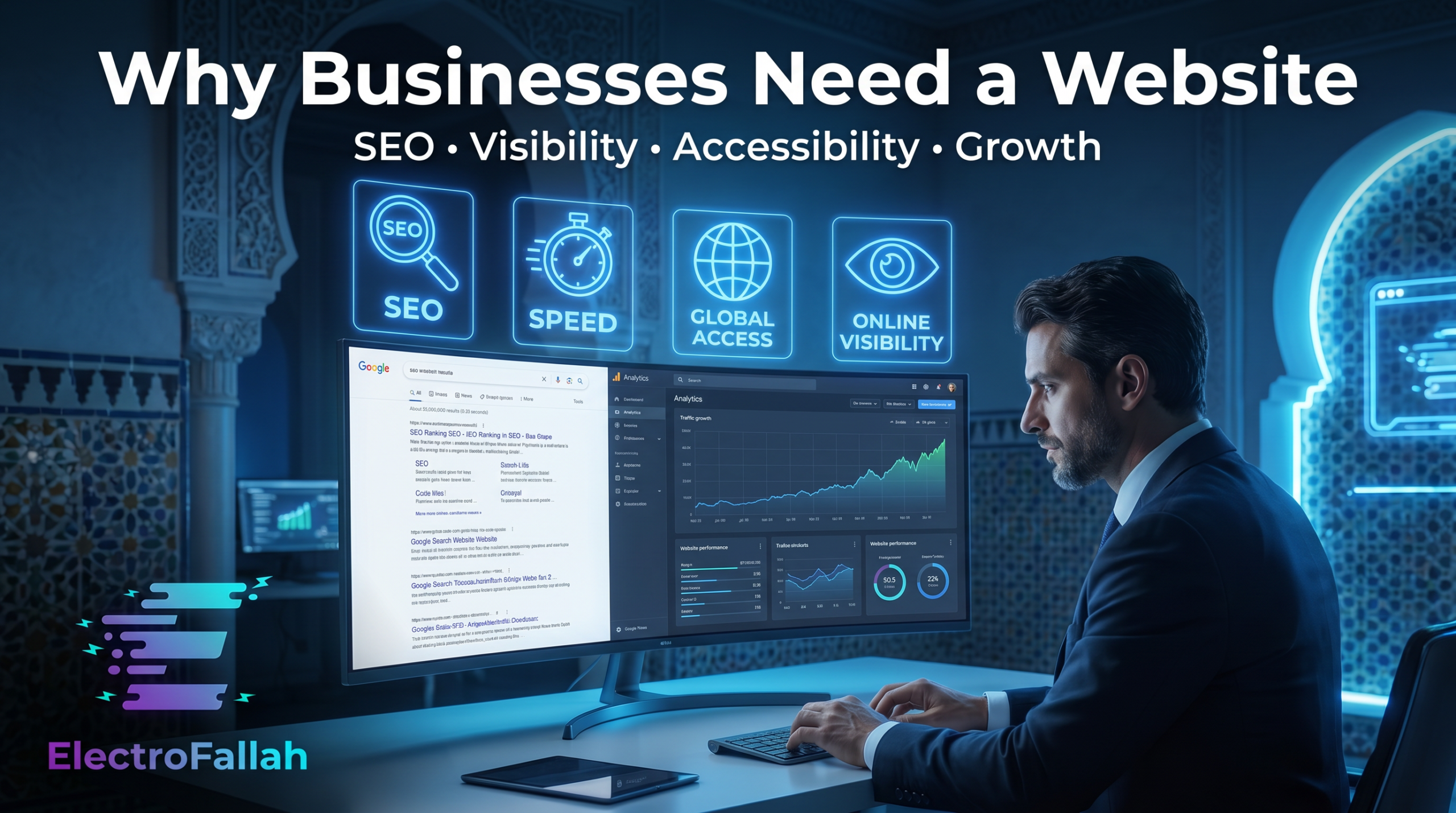
To understand the fundamental difference between a mobile app or website, we need to look at how each one works and how users access it. A website is a collection of pages accessible through a web browser such as Chrome or Safari, whether from a phone or a computer. The website is loaded from an external server every time a user visits it, and it does not need to be installed on their device. Websites are generally compatible with all devices thanks to responsive design technologies.
A mobile app, on the other hand, is a program that is downloaded and installed directly on the user’s device from an app store like Google Play or the App Store. The app uses the device’s own resources such as the camera, GPS, and notifications, providing a faster and more personalized experience. Apps can work partially without an internet connection, which sets them apart from websites that require a continuous connection.
Both options have their advantages and disadvantages, and the choice between them depends primarily on the nature of your project, your goals, and your target audience. In the following sections, we will dive deeper into each option to help you make the right decision.
When Do You Need a Mobile App for Your Project?
Several indicators suggest that your project needs a mobile app rather than a website. If your project relies heavily on device features such as the camera, GPS, push notifications, or Bluetooth, then the app is undoubtedly the best choice. For example, food delivery apps, navigation apps, and social media apps all require these native features to function properly.
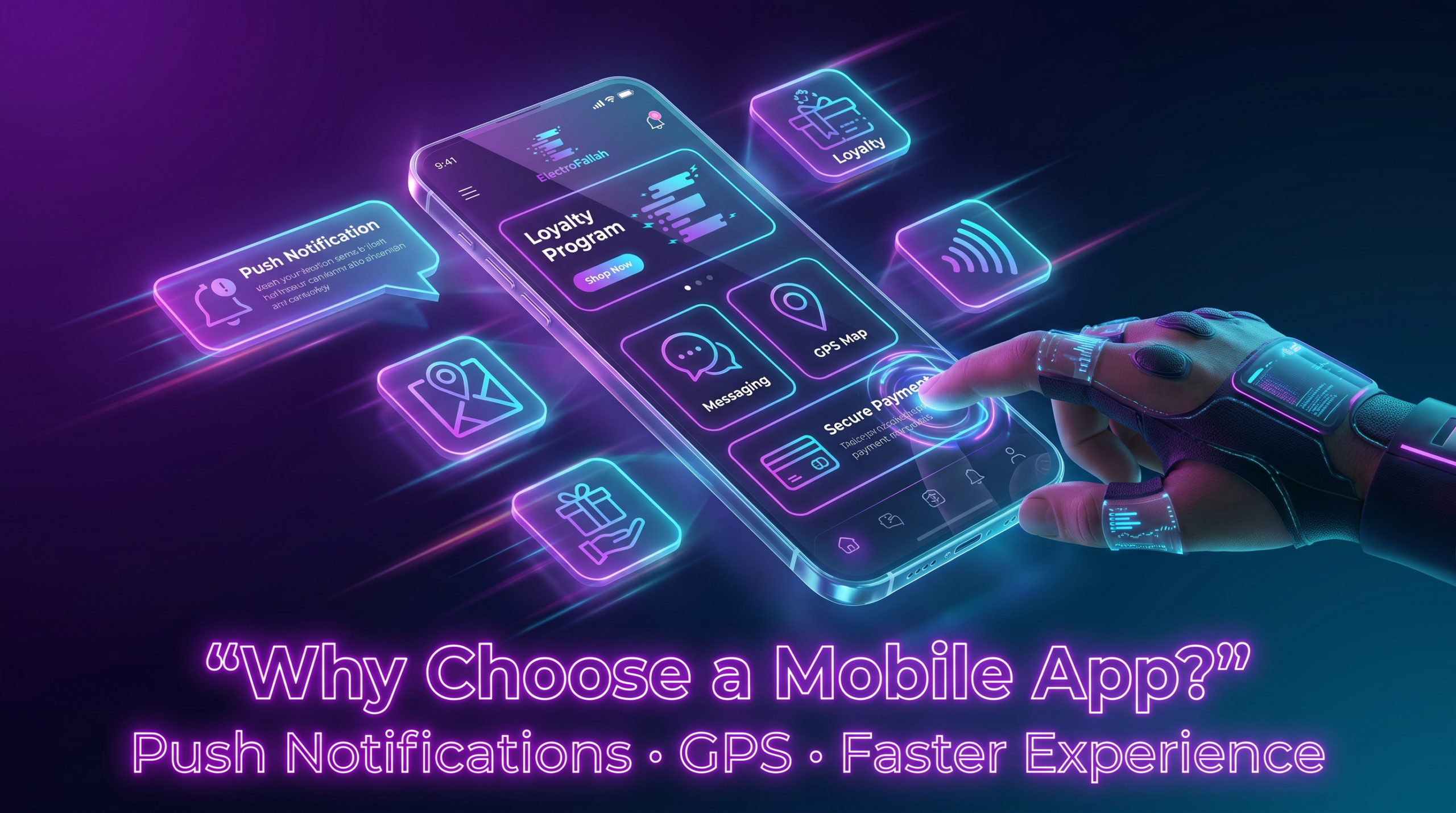
Similarly, if you are targeting an audience that primarily uses their phone and want to deliver a smooth and fast experience, an app offers much better performance than a website. Native apps run faster because part of the data is stored on the device itself, and they allow you to send direct notifications to users to increase engagement and sales. If your project requires intensive use without an internet connection, such as navigation apps or note-taking apps, then the app is the optimal solution.
On the other hand, if your expected audience uses your product daily and frequently, such as fitness apps or task management apps, the user experience in the app is much better. Users prefer in this case to open one dedicated app instead of browsing a website every time. Therefore, when thinking about a mobile app or website, you should ask yourself: do my users need to use my product several times a day?
When Is a Website the Best Option?
A website remains the optimal choice in many cases, especially for projects that do not need complex features or intensive use of device features. If your main goal is to appear in search engine results and attract new visitors from Google, then a website clearly outperforms an app because it can be easily indexed by search engines. This means people can find your site easily when searching for the services or products you offer.
Additionally, if you provide informational, educational, or commercial content that is browsed intermittently, such as blogs, simple online stores, and company websites, then a website is perfectly sufficient at a much lower cost. Websites do not require approval from app stores to be published, meaning you can launch and update your site at any time without any restrictions. Access to the website is also done through a direct link, making it easy to share on social media and in email messages.
From a financial perspective, when comparing a mobile app or website in terms of initial cost, you will find that a website is significantly less expensive. Developing a professional website usually costs much less than developing a mobile app, especially if you need two separate apps for iOS and Android. Maintaining and updating a website is also easier and cheaper than maintaining an app that requires periodic updates for each operating system.
Comprehensive Comparison: Mobile App or Website
To simplify the process of choosing between a mobile app or website, we have prepared a comprehensive comparison table that highlights the main differences between them in the most important technical and commercial aspects:
| Criteria | Mobile App | Website |
|---|---|---|
| Access Method | Download from Store | Via Web Browser |
| Initial Cost | High | Low to Medium |
| Maintenance & Updates | Updates for Each OS | Single Central Update |
| SEO & Google Visibility | Limited | Excellent |
| Offline Operation | Yes, Partially | No |
| Device Features | Full (Camera, GPS) | Limited |
| Performance Speed | Very Fast | Depends on Internet |
| Push Notifications | Fully Supported | Limited |
| Content Publishing | Requires Store Approval | Instant |
| Compatibility | iOS and Android Separate | All Devices at Once |
Development Cost: Mobile App vs Website
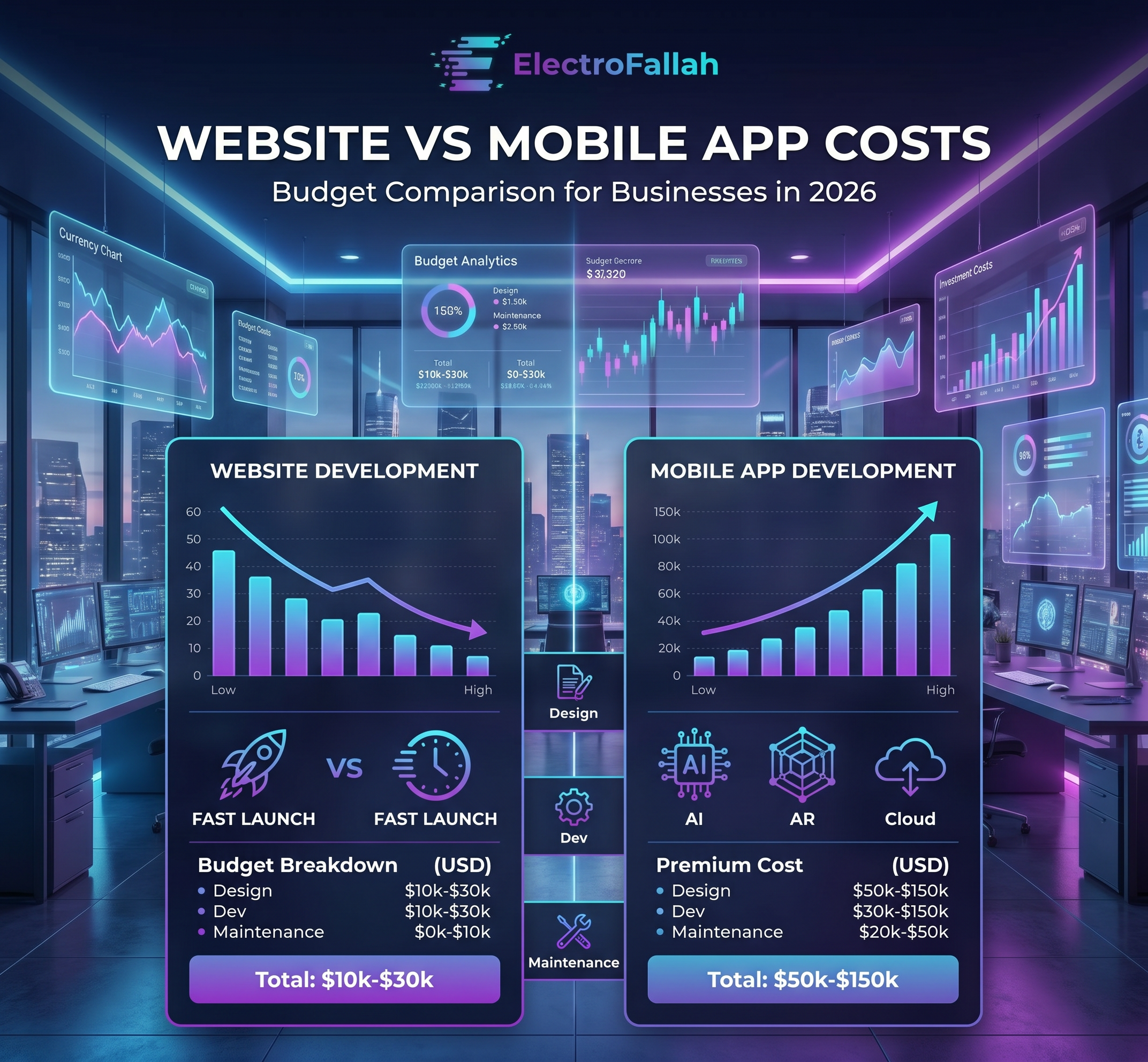
Cost is one of the most important factors that influence your decision when choosing between a mobile app or website. The cost of developing a professional website in Morocco typically ranges between 5,000 and 30,000 MAD depending on the complexity and required features. This includes responsive design, interface development, database connection, and basic SEO optimization. The cost of developing a mobile app starts from 20,000 MAD for a simple app and can reach over 150,000 MAD for complex apps that require advanced features.
The difference in cost is due to several main reasons. First, if you want an app that works on both iOS and Android, you will need to develop two separate apps or use technologies like React Native or Flutter, which increases the cost. Second, apps require extensive testing on different devices and different versions of operating systems. Third, annual fees for app stores add ongoing costs, with Google Play requiring a one-time fee while Apple requires an annual developer subscription.
In addition to the initial development cost, you must consider ongoing maintenance costs. Websites need periodic security updates and hosting renewal, while apps need updates compatible with each new version of iOS or Android, along with bug fixes and new feature additions. Therefore, when comparing a mobile app or website in terms of total long-term cost, you should calculate the initial cost plus annual maintenance costs.
Hybrid Apps and Progressive Web Apps
If you are still hesitant between a mobile app or website, there are middle-ground solutions worth exploring. Hybrid apps are applications that look and behave like native apps but are built using web technologies such as HTML, CSS, and JavaScript. They are wrapped in a native container that gives them access to some device features. These apps cost less than native apps and work on both iOS and Android with a single codebase.
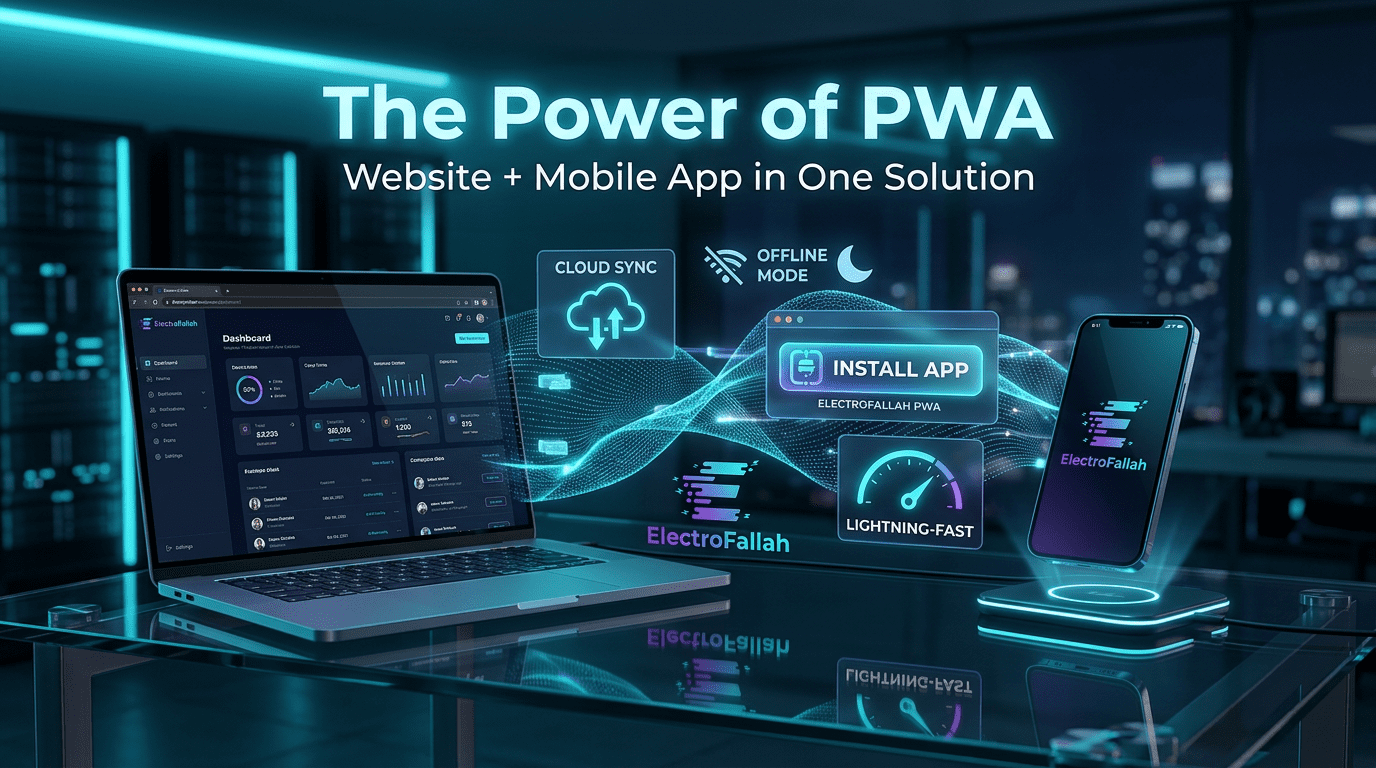
Progressive Web Apps, on the other hand, are advanced websites that offer an experience similar to native apps. This technology allows users to install the website on their phone’s home screen, work partially offline, and send push notifications. PWAs are an excellent solution for projects that want to benefit from app features without bearing the cost of developing a native app. According to Google Developers, progressive apps combine the best of both web and app worlds. At ElectroFallah, we offer app development services of all types to suit your project needs.
How to Choose the Right Option for Your Project in Morocco
The choice between a mobile app or website should be based on a careful analysis of your project needs, not on current trends. Start by clearly defining your goals: what do you want to achieve with your digital presence? Do you want to attract new customers from search engines? Do you need daily interaction with users? Does your product rely on specific device features? The answers to these questions will guide you toward the right decision.
Here are some practical criteria you can follow. If your target audience in Morocco primarily uses the internet to search for services and products, start with an SEO-optimized website. If you run an online store or provide services accessible through a browser, a website is sufficient in the first stage. However, if your app needs push notifications, camera features, GPS, or relies on intensive daily interaction with users, then the app is the better option.
The good news is that you do not have to make this decision alone. At ElectroFallah, we offer a free consultation to help you determine the most suitable solution for your project based on your budget, goals, and target audience. Our team of experts has extensive experience in developing both websites and apps, and we can guide you toward the optimal decision.
The Ideal Solution: Combining Both
In many cases, the choice between a mobile app or website is not exclusive. The most successful digital strategies combine both for maximum impact. Start with a strong, SEO-optimized website to attract visitors and build a strong digital presence, then add a mobile app later to enhance engagement with your existing customers and provide them with a personalized experience.
Many major companies in Morocco and around the world follow this exact strategy. An e-commerce company starts with a complete website with an online store to sell its products online, then launches a mobile app to provide a better shopping experience and send special offers through notifications. This gradual approach allows you to test the market and validate your idea before investing in a full mobile app.
Whatever your choice, the ElectroFallah team is ready to help you at every step of your digital project. From design to development to continuous optimization, we provide comprehensive solutions that fit your budget and meet your customers’ needs. Contact us today to discuss your project and get a free consultation.
Need Help Choosing the Best Solution for Your Project?
The ElectroFallah team specializes in developing websites and apps in Morocco. Contact us for a free consultation and let us determine the optimal solution that fits your needs and budget.
Frequently Asked Questions
Can I start with a website and convert it to a mobile app later?
Yes, this is a common and recommended strategy. You can start with a strong website to test your idea and attract your audience, then develop a mobile app when your project proves successful. This gradual approach reduces financial risk and allows you to understand your customers’ needs before investing in a full app.
What is the difference in development cost between a mobile app and a website?
Website development typically costs between 5,000 and 30,000 MAD, while a mobile app starts from 20,000 MAD and can exceed 150,000 MAD depending on complexity. The difference is due to the need to develop separate apps for iOS and Android, extensive testing on different devices, and app store fees.
Are hybrid apps a good alternative to native apps?
Hybrid apps are an excellent middle-ground solution. They cost less than native apps and work on both iOS and Android with a single codebase, but their performance may be slightly less smooth than native apps. If your budget is limited and you want an app-like experience, hybrid is a good choice. Progressive Web Apps (PWA) also offer a great experience at a lower cost.
How can I improve my website’s visibility in search engines?
Improving your website’s visibility in search engines requires a comprehensive strategy including keyword optimization, site speed, responsive design, high-quality content, and link building. The ElectroFallah team offers complete SEO services to help you rank at the top of search results in Morocco.
How long does it take to develop a website or a mobile app?
Developing a professional website typically takes 4 to 8 weeks depending on complexity and required features. A mobile app takes 8 to 16 weeks for a single app, and if you need apps for both iOS and Android, the timeline may extend to over 20 weeks. Good planning and clearly defined requirements can significantly reduce this timeline.